

Key Points:
- An autism reward system harnesses positive reinforcement to encourage desired behaviors by offering meaningful rewards.
- Effective systems combine specific goals, consistent tracking, and age-appropriate motivators like token charts, token economy, and social praise.
- Parents and therapists must adapt systems over time, fading tangible rewards and reinforcing independence through frequent review and collaboration.
Behavior change without reinforcement is difficult to maintain, especially for children with autism who thrive on predictability. A structured reward system provides clear expectations and immediate feedback, fostering motivation and building self-confidence.
When expectations are visible and rewards are consistent, children begin to understand which behaviors lead to positive outcomes. Over time, they internalize these patterns, leading to lasting improvements in independence, emotional regulation, and social engagement—even after the external rewards are no longer needed.
What is an Autism Reward System?
An autism reward system is a structured approach that uses positive reinforcement—such as praise, tokens, or preferred items—to increase desired behaviors and reduce challenging ones. By clearly linking behavior to reward, it supports motivation and learning in a predictable, transparent way.
This method—also known as a token economy, merits system, or behavior chart—is widely recognized in Applied Behavior Analysis (ABA) as a powerful tool for promoting social skills, compliance with routines, and emotional regulation.
Why Use a Reward System for Autism?
A reward system helps children with autism understand expectations and reinforces positive behavior in a clear, structured way. It increases motivation, builds confidence, and supports learning by providing consistent, meaningful feedback.
Over time, these systems teach children that their actions have positive outcomes. As rewards are gradually faded, the behaviors often remain, leading to improved independence, emotional regulation, and social skills across home, school, and community settings.
Types of Autism Reward Systems
Before diving into examples, here’s a note: parents and therapists should choose based on age, preferences, and goals. The system should feel motivating—not coercive or overwhelming. Now let’s break down common options:
1. Token Economy
Children earn tokens (like stars or coins) for specific behaviors, which they can exchange for a reward. This system teaches delayed gratification and works well for building routines, task completion, and classroom behaviors.
2. Behavior Charts
Charts list target behaviors alongside visual indicators (e.g., smiley faces or checkmarks) for tracking progress. They’re ideal for promoting daily habits like hygiene, homework, or chores, offering clear structure and reinforcement.
3. Marble/Sticker Jar
Each appropriate behavior earns a marble or sticker added to a jar. Once full, the child earns a prize. This simple, visual system is especially motivating for younger children or early learners.
4. Social Reinforcement
Praise, high-fives, or special privileges are used to reward behavior. Social reinforcement builds strong emotional connections and supports intrinsic motivation, making it effective alongside other systems or in naturalistic settings.
5. Visual First–Then Systems
This method uses visual cues to show that after completing one task (“first”), the child gets a reward (“then”). It’s particularly helpful for children who benefit from clear, immediate expectations and structure.
 How to Implement a Reward System
Moving from concept to implementation requires careful planning. By using the right techniques, parents can successfully implement a reward system at home. Below is a step-by-step framework to help parents launch and maintain a reward system effectively:
1. Identify Target Behaviors
Clearly define the specific behaviors you want to reinforce, such as completing chores, using words, or following directions. The more precise the behavior, the easier it is to track and reinforce effectively.
2. Select Meaningful Reinforcers
Choose rewards that genuinely motivate your child—snacks, toys, screen time, or special activities. Keep options varied and specific to your child’s interests to maintain engagement over time.
3. Choose a System
Decide which reward system suits your child best—token economy, sticker chart, marble jar, or social praise. The format should align with their age, preferences, and ability to understand the system.
4. Establish Criteria
Set clear guidelines for earning rewards. For example, determine how many tokens equal a reward or which behaviors need to be completed to receive a sticker. Consistency ensures fairness and understanding.
5. Teach Expectations
Introduce the system by explaining how it works. Model the behavior you want to see, and walk your child through examples so they understand what’s expected and how they’ll be rewarded.
6. Implement Consistently
Follow through every time the target behavior occurs. Immediate and predictable reinforcement helps children connect their actions to positive outcomes, making the reward system more effective.
7. Track Progress
Monitor behavior trends through charts, logs, or apps. Regularly reviewing data helps you adjust the system, celebrate wins, and address any challenges with support from your therapy team.
How to Maintain and Adapt the Reward System
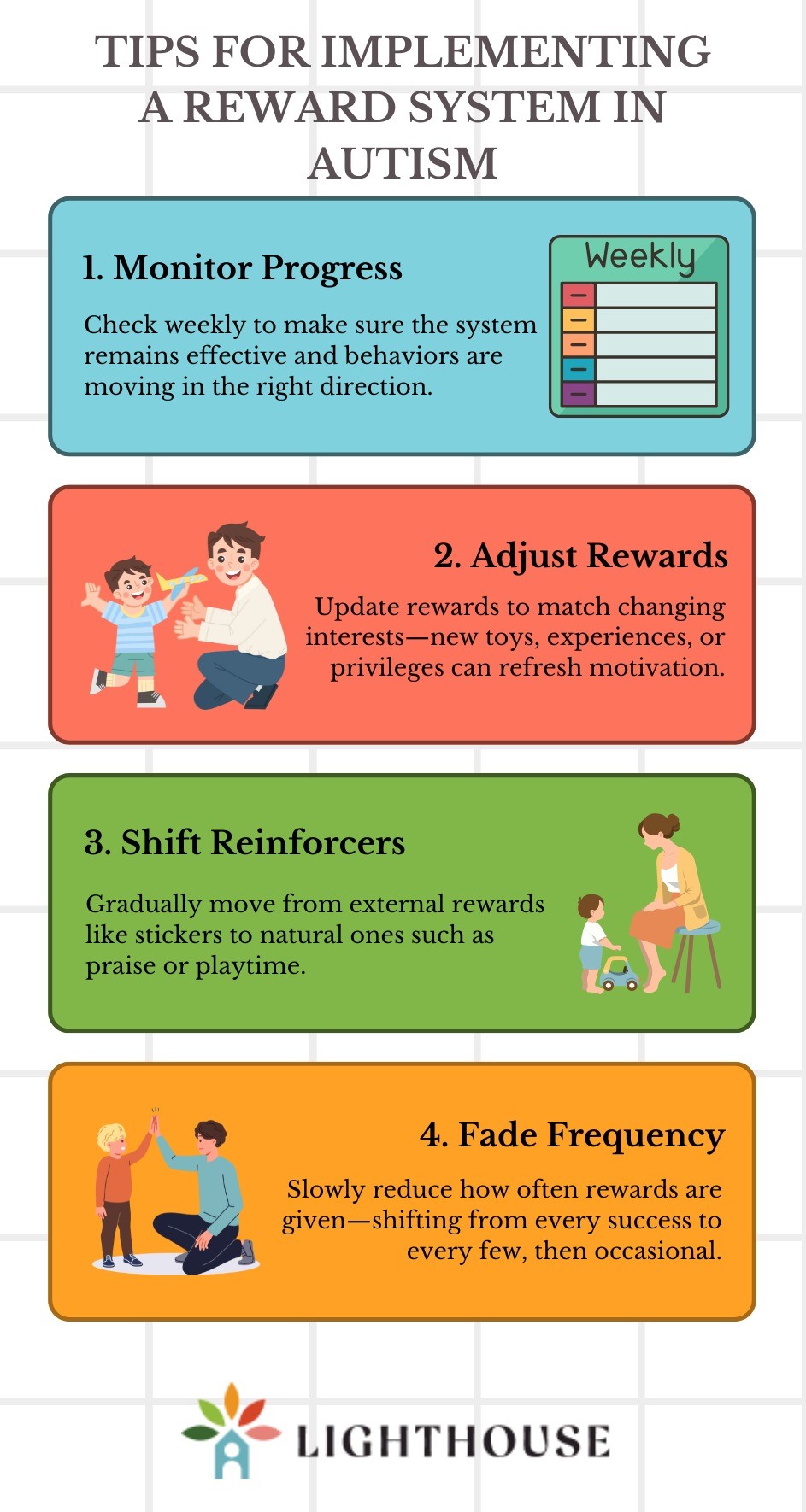
A reward system should evolve with your child. What motivates them today may not work next month, and that’s normal. Regular adjustments help maintain interest, increase independence, and ensure the system grows alongside your child’s needs.
Below are some tips for adapting a successful reward system:
 What are Common Pitfalls of Reward Systems?
Common pitfalls of reward systems for children with autism include using unmotivating rewards, being inconsistent, or failing to explain expectations clearly. These issues can lead to confusion, frustration, or loss of interest over time.
To avoid these challenges, choose meaningful reinforcers, deliver them consistently, and clearly define target behaviors. Regularly update the system based on your child’s progress and preferences. When implemented thoughtfully, a reward system can build lasting skills and increase motivation in both home and school settings.
Turn Challenges Into Learning With ABA Therapy
At Lighthouse, we use customized autism reward systems as part of our ABA therapy programs. We help families set up token economies, behavior charts, and praise protocols that align with individual goals and home routines.
We offer ABA therapy in New York City, ensuring practical tools and strategies are actively used in daily life. Our team provides training, consistency checks, and progression plans to transition from rewards to natural motivation.
Contact us today to learn how we can support your child with an effective reward system that builds skills, confidence, and joy!